While LinkedIn Recruiter is the undisputed giant of the professional networking world, it isn’t the most efficient or cost-effective tool for building a high-performing team. Consider the rising costs of Recruiter seats and InMail fatigue that causes top-tier candidates to ignore messages. Exploring a LinkedIn Recruiter alternative can provide more targeted results, better response rates, and specialized vetting that a general social network simply can’t offer.
What does your specific hiring cycle require? Are you looking for a massive volume of applicants or a specialized top-tier professional?
In this guide, we’ll introduce the best LinkedIn Recruiter alternatives for 2026, highlighting how they compare on cost, talent quality, and sourcing efficiency.
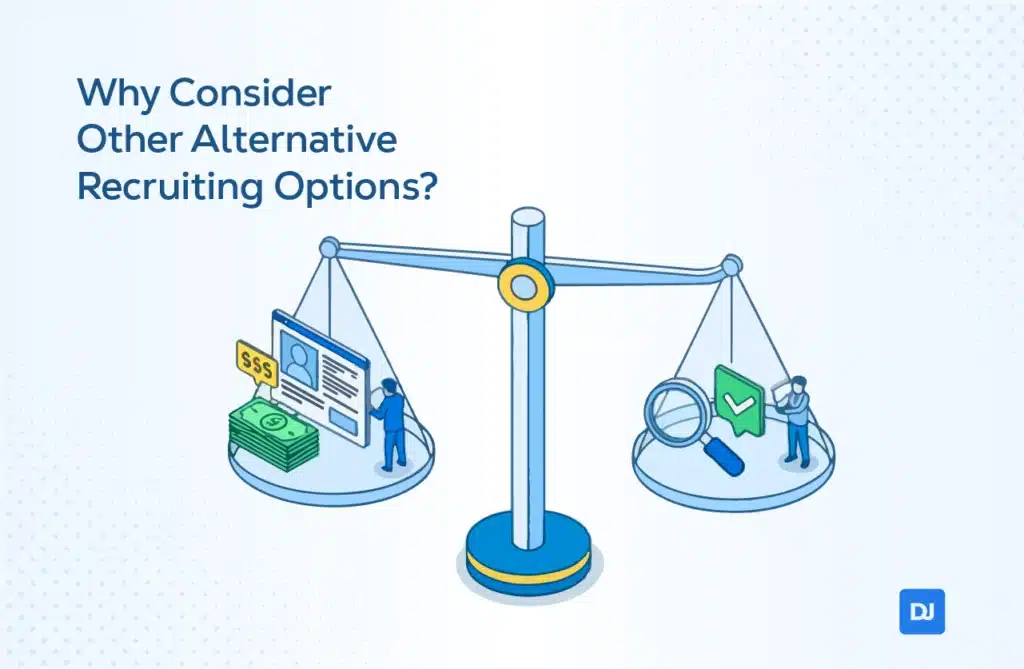
Why Consider Other Alternative Recruiting Options?
LinkedIn Recruiter has made a name for itself as the default tool for HR departments, but it’s not a one-size-fits-all solution. Here are a few reasons why you might need a LinkedIn Recruiter alternative:
- It’s Expensive: A single LinkedIn Recruiter Corporate seat can cost nearly $9,000 to over $10,800 per year. For startups, small, and medium businesses, this is a massive overhead.
- Low Response Rates: Top developers and executives are often bombarded with dozens of InMails a day. Your message is likely to get buried in the noise.
- Manual Sourcing is Time-Consuming: LinkedIn Recruiter is a database, not a recruitment service. You still have to do all the heavy lifting of filtering, reaching out, and vetting.
- Lack of Technical Vetting: LinkedIn profiles are self-reported. There is no built-in mechanism to verify whether a candidate actually possesses the coding skills they claim. You are on your own.
11 Best LinkedIn Recruiter Alternatives in 2026
What sourcing methods are more effective than LinkedIn? It depends on your specific goals. Let’s explore the top alternatives.
1. DistantJob
DistantJob is a remote recruitment agency that acts as the best alternative to manual sourcing on LinkedIn. Instead of you spending hours scrolling through profiles, DistantJob’s team of expert headhunters does the work for you, focusing specifically on the IT and tech niche.
Comparing DistantJob and LinkedIn Recruiter is a bit like comparing a full-service chauffeur to a high-end sports car. One does the work for you, while the other is a powerful tool you must drive yourself.
The fundamental difference is that DistantJob is a recruitment agency, whereas LinkedIn Recruiter is a SaaS (Software as a Service) tool. We offer you a huge time saver, high-quality technical vetting, and zero compliance headaches.
| Feature | DistantJob | LinkedIn Recruiter |
| Model | Managed Service (Agency) | Self-Service Tool |
| Effort Required | Low: We source, vet, and interview. | High: You search, message, and vet all by yourself. |
| Pricing | A monthly placement fee. No hidden fees. | Monthly/Annual subscription per seat. |
| Vetting | Technical and soft-skill vetting included. | No vetting; you verify skills yourself. |
| Back-office | Handles global payroll, HR, & compliance. | None; you must have your own HR/EOR. |
| Best For | Hard-to-fill tech roles & global remote teams. | High-volume hiring or active internal HR. |
Hiring Process: DistantJob uses a 3-tier vetting process. First, their global headhunting team identifies candidates who match your exact technical requirements. Then, they conduct rigorous technical and soft-skill interviews. Finally, you are presented with only the top 1% of candidates who are ready to work.
Key Features:
- Access to Pre-Vetted Top 1% Global Talent: You see only the top 1% of candidates in a global talent pool rather than sorting through hundreds of resumes.
- Outcome-Oriented: You don’t pay for a seat or software; you pay for a successful hire.
- Culture Match: Unlike LinkedIn’s algorithmic matching, DistantJob focuses on finding candidates who fit your company’s core values.
- Full HR Support: We handle the onboarding and ongoing HR management, something LinkedIn doesn’t touch.
- Employer of Record Services: Beyond just finding the person, we act as an EOR. We handle the messy parts of international hiring: local labor laws, contracts, and monthly payroll.
Pricing: Transparent model centered on a recruitment fee. You only pay when you find the right fit.
2. Wellfound (formerly AngelList Talent)
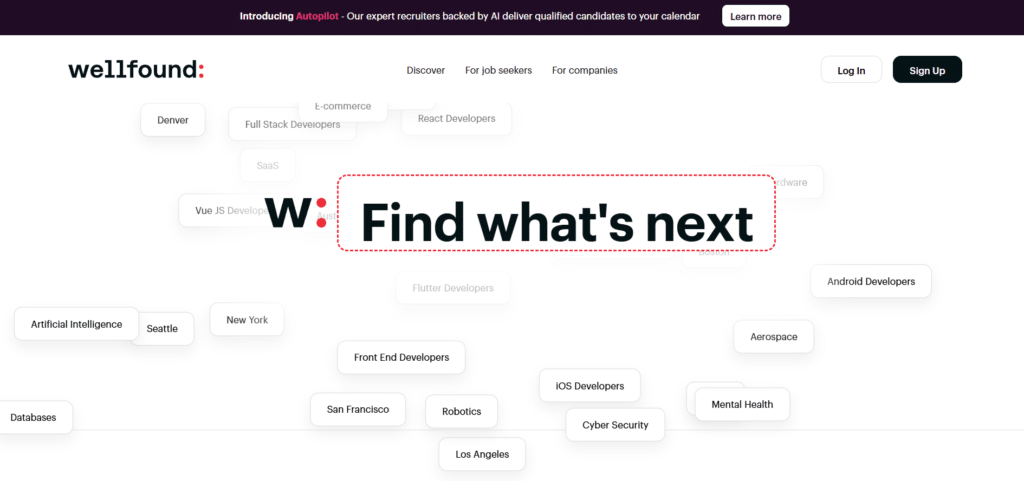
Wellfound is the home court for tech startups. If you are a founder or a lean recruiting team, this is often the better starting point. It is specifically designed for the startup ecosystem.
While LinkedIn Recruiter is the industry standard for general corporate recruiting, Wellfound (formerly AngelList Talent) has carved out a high-intent alternative specifically for the tech and startup world.
Hiring Process: You post your job and startup profile. Candidates apply specifically because they want to work in a startup environment. It removes the “big corporate” noise found on LinkedIn.
Key Features:
- Startup-Specific: Candidates are pre-filtered for their interest in equity and fast-paced environments.
- Free Sourcing: You can post jobs and manage candidates for free, with paid tiers for advanced filtering.
Pricing: Free basic tier; Recruit Pro subscription starts around $200/month.
3. Hired
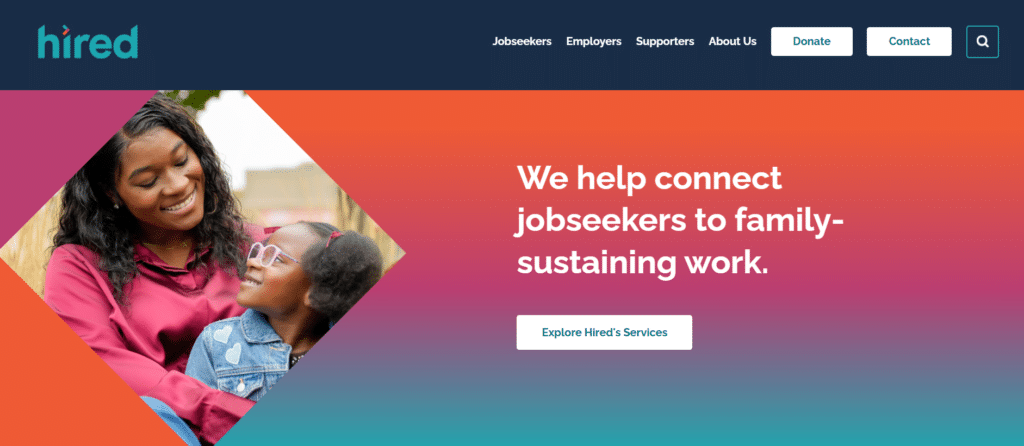
Hired flips the LinkedIn model on its head. Instead of recruiters hunting for candidates, candidates on Hired are actively looking for roles and have already been vetted by the platform.
While LinkedIn Recruiter provides access to the world’s largest professional database, Hired is a curated marketplace specifically for tech and sales talent.
Hiring Process: You access a curated pool of candidates who are actively looking for work. You see their salary expectations and skills upfront, reducing the back-and-forth typical of LinkedIn InMails.
Key Features:
- High Response Rates: Since candidates are active, response rates are significantly higher than on LinkedIn Recruiter.
- Bias Reduction: Tools to help hide names and photos to focus on skills.
Pricing: Subscription-based or a percentage of the hire’s salary.
4. Indeed
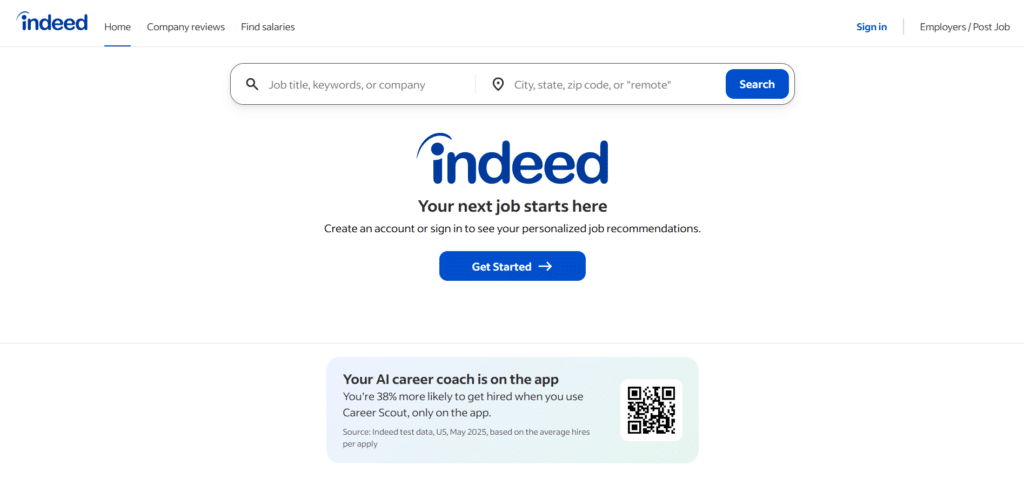
While LinkedIn focuses on passive candidates, Indeed is the king of active candidates. It remains the largest job board in the world.
Choosing between Indeed and LinkedIn Recruiter depends entirely on whether you are looking for volume or precision. While Indeed is the world’s largest job-specific search engine, LinkedIn Recruiter is a sophisticated “headhunting” tool for a professional network of over 1 billion people.
Hiring Process: You post a job and pay to “sponsor” it for better visibility. Indeed’s “Invite to Apply” feature allows you to proactively reach out to candidates who match your job description.
Key Features:
- Massive Volume: Unmatched reach for non-tech and general administrative roles.
- Simple Management: Integrated ATS (Applicant Tracking System) for managing resumes.
Pricing: Pay-per-click or pay-per-application models.
5. Welcome to the Jungle
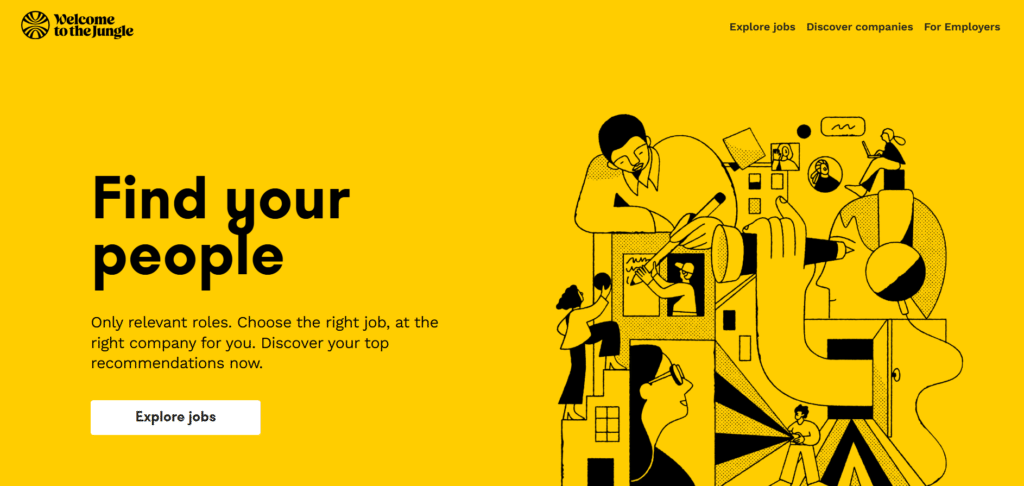
Welcome to the Jungle has quickly become a favorite for tech companies in the UK and the US. It is a candidate-first platform that focuses on high-growth tech companies.
LinkedIn Recruiter is the “gold standard” for sheer volume and breadth. On the other hand, Welcome to the Jungle has carved out a niche as the quality over quantity platform specifically for the tech and startup ecosystem. It’s designed for companies that want to attract talent who care about more than just a paycheck. Welcome to the Jungle forces transparency on things like salary, diversity data, and company mission.
Hiring Process: Welcome to the Jungle uses a matching style similar to dating apps. They ensure that your company is presented to candidates who are looking for exactly what you offer.
Key Features:
- Better Response Rates: Because Welcome to the Jungle matches candidates based on their preferences, they are significantly more likely to engage with you.
- Quality Filter: You won’t get the “spam” applications common on LinkedIn; the platform pre-vets candidates to ensure they actually fit the startup/tech profile.
- Brand First: It allows you to build a “Company Profile” that feels like a modern landing page, showcasing your culture effectively.
Pricing: Tiered based on company size and hiring volume.
6. Dice
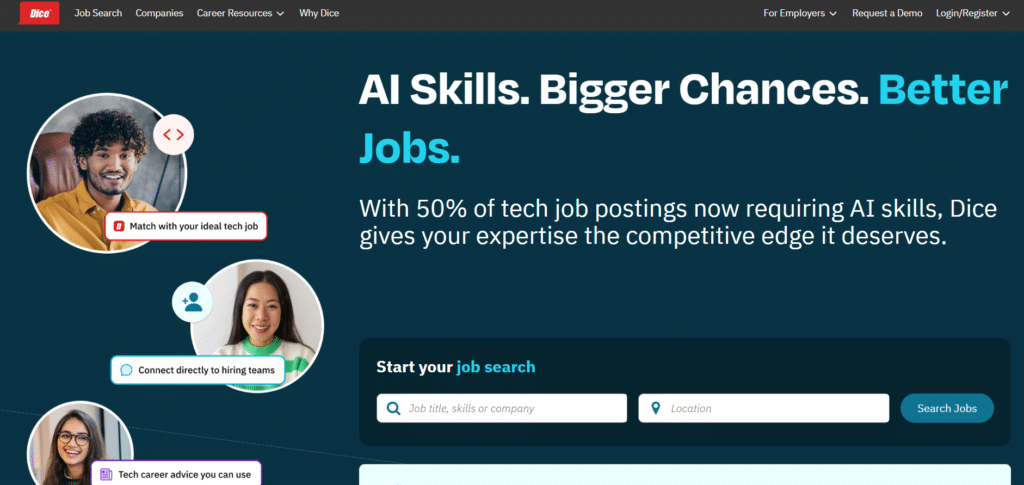
Dice is the scalpel of recruiting tools. If you are looking for a Python Developer with specific security clearances or a Cloud Architect open to C2C contracts, Dice’s filters are superior.
For those specifically in the tech sector, Dice is a specialized LinkedIn Recruiter alternative that focuses exclusively on technology professionals. In 2026, the gap between the two has widened as LinkedIn leans heavily into AI-driven automation, while Dice remains the old reliable for deep technical filtering.
Hiring Process: You search a database of millions of tech resumes or post jobs to a highly targeted audience of developers, data scientists, and engineers.
Key Features:
- Social Sourcing: Their “TalentPro” tool aggregates data from social sites to find tech talent.
- Tech-Specific Filters: Filter by specific coding languages, certifications, and years of experience that can sometimes be missed or buried in LinkedIn’s broader, more networking-focused search algorithms.
- Candidate Database: It allows access to a searchable database of resumes, often including direct contact info that doesn’t require credits to view.
Pricing: Custom quotes, usually based on a per-post or per-seat model.
7. Gem
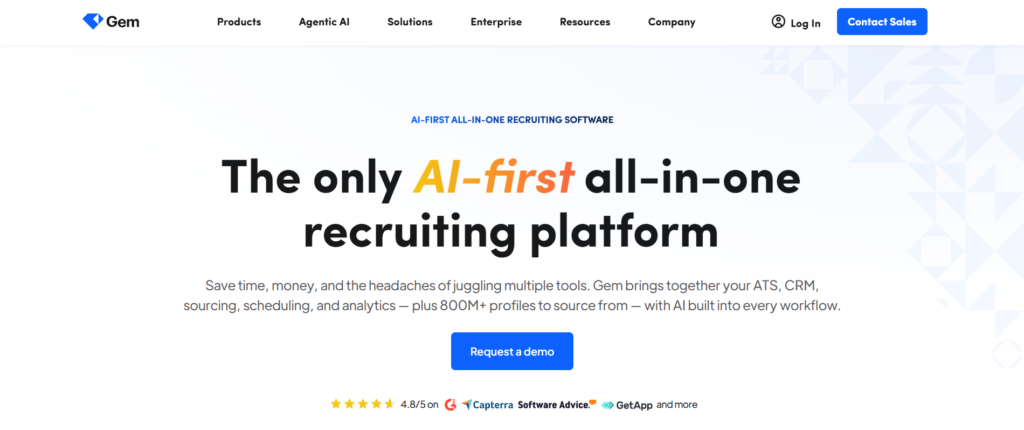
Gem is not a job board, but a Recruiting CRM. It sits on top of LinkedIn and other sites to automate the outreach process that LinkedIn Recruiter makes so tedious. Gem does not have its own social network. You still need LinkedIn Recruiter’s advanced filters (years of experience, current company, open to work signals) to build your initial list.
Most modern recruiting teams use both because Gem solves several pain points inherent to LinkedIn Recruiter. For example, LinkedIn InMail response rates have plummeted as candidates feel “spammed.” Gem uses a Chrome extension to find a candidate’s work or personal email, allowing you to send automated sequences that feel like personal emails.
Hiring Process: You use Gem to build “sequences” (automated email follow-ups) for candidates you find. It turns manual sourcing into an automated sales-style funnel.
Key Features:
- Automated Follow-ups: Dramatically increases response rates.
- Analytics: See exactly which messages are working and which aren’t.
Pricing: Annual subscription based on the number of recruiting users. Technically, you do not need a LinkedIn Recruiter or Premium account to use Gem, but your experience will be significantly different. For example, without a LinkedIn Recruiter seat, you will be limited to 1st-degree connections for sending InMails, but you can still use Gem’s email sequences to reach out to 2nd and 3rd-degree connections.
8. Fetcher
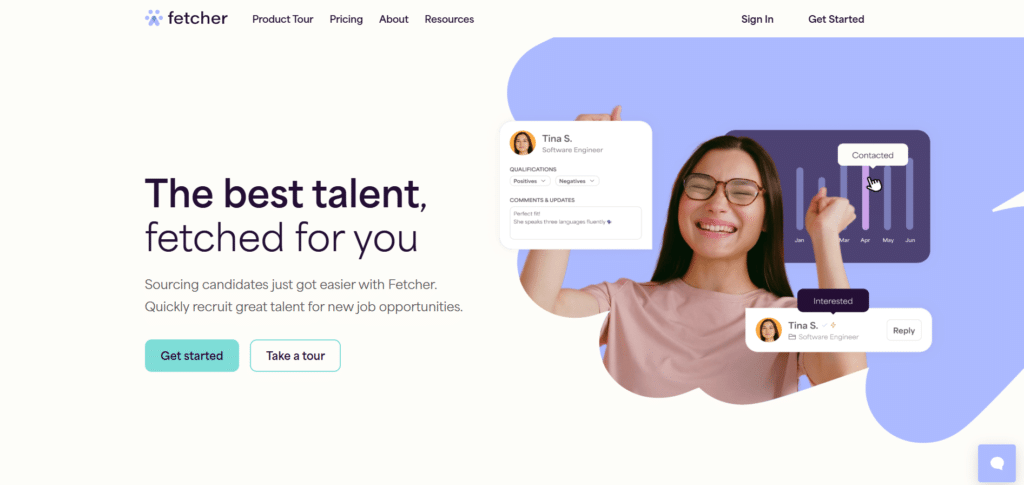
Fetcher combines AI with human sourcing to provide a “hands-off” alternative to LinkedIn Recruiter. It does the work for you, in contrast with LinkedIn Recruiter, which gives you complete control over the largest database of professionals.
Fetcher is great for standard roles (Software Engineers, Sales, Marketing). For extremely niche or purple squirrel roles, LinkedIn Recruiter’s manual filters are still more reliable.
Hiring Process: You provide a job description, and Fetcher’s AI finds candidates across the web. Instead of InMails, Fetcher finds personal/work emails and sends automated follow-up sequences. This often results in higher response rates because it lands in the candidate’s actual inbox. Their human team then double-checks the results and sends them to your inbox.
Key Features:
- Passive Sourcing: They find people who aren’t looking, similar to LinkedIn, but they do the reaching out for you.
- DE&I Focus: Fetcher ensures diverse candidate slates, which is more automated than LinkedIn’s manual diversity filters.
Pricing: Monthly or annual subscription.
9. GitHub & Stack Overflow
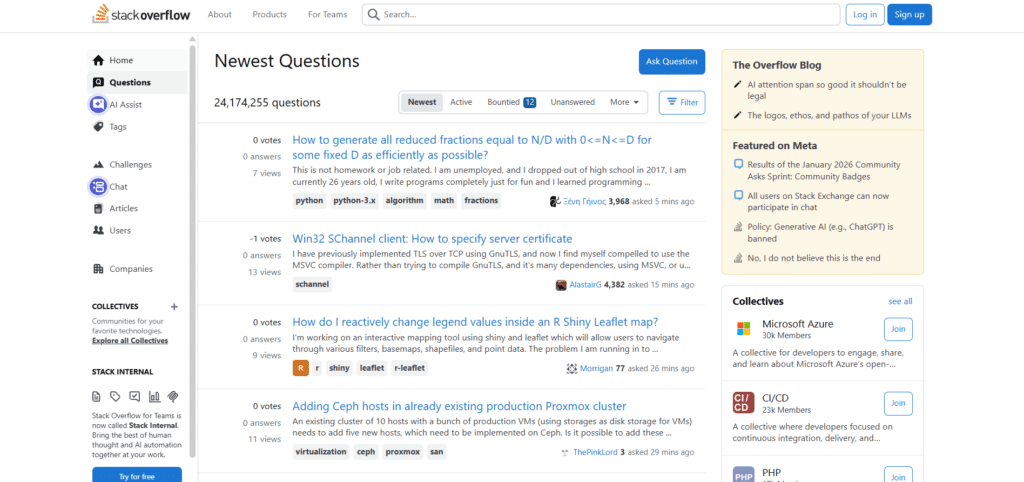
To hire developers, sometimes the best alternative is to go where they actually work. These platforms allow you to see a candidate’s actual contributions to the tech community. While LinkedIn is the industry standard for breadth and workflow management, the others offer depth and skill verification that LinkedIn cannot.
GitHub is where developers actually work. Stack Overflow shows how a developer thinks and communicates. For a recruiter, they serve as a living resume.
Be aware that since Stack Overflow discontinued its “Talent” job board, it is purely a sourcing research tool. Direct outreach here is tricky; the community is famously protective, and “spammy” recruiter messages are often flagged or ignored.
Hiring Process: You can use “Stack Overflow Talent” to post jobs or “GitHub Jobs” (though now mostly shifted to GitHub’s own ecosystem) to find developers based on their repositories.
Key Features:
- Proof of Work: You can see their code before you even talk to them.
- Niche Targeting: Find developers who are experts in very specific, obscure libraries.
Pricing: Free (for basic manual sourcing).
10. Lusha / Apollo.io
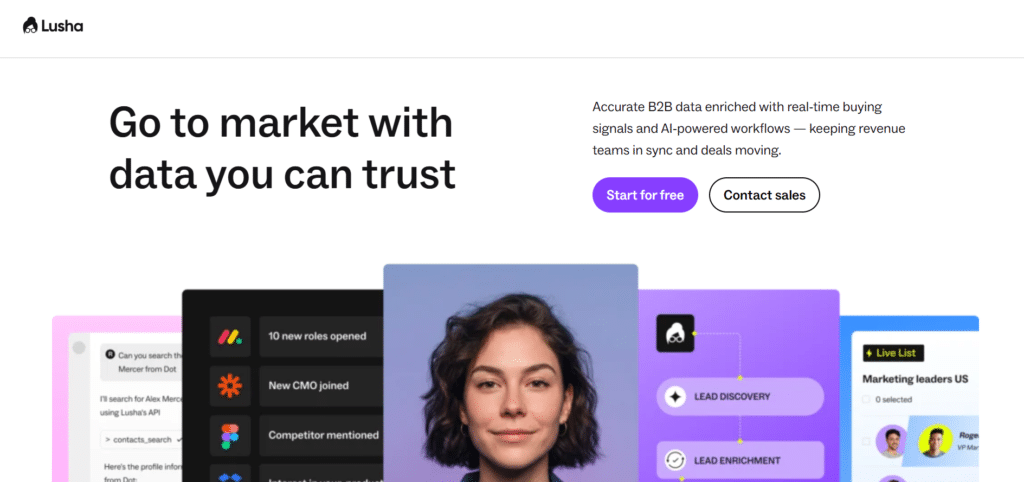
If your main use for LinkedIn Recruiter is just finding contact information, tools like Lusha or Apollo are much cheaper alternatives. Apollo and Lusha are data enrichment and outreach tools.
Lusha doesn’t try to do everything; it focuses on having the most accurate contact data. On the other hand, Apollo is like a Swiss Army knife. It has a massive database and includes built-in tools to send automated email sequences.
Hiring Process: You use these tools to find the personal email addresses and phone numbers of candidates on LinkedIn without paying for the expensive Recruiter seat.
Key Features:
- Cheaper: Significantly lower cost than a LinkedIn Recruiter license.
- High-volume recruiting: If you need to find 200 software engineers and put them into an automated 4-step email sequence, Apollo is the winner.
- High-stakes headhunting: When you find the perfect candidate and absolutely need their correct mobile number to call them directly, Lusha is generally more reliable than Apollo or LinkedIn.
Pricing: Free tiers available; professional tiers start around $30-$50/month.
11. ZipRecruiter

ZipRecruiter is a powerful alternative for those who want their job post to appear everywhere at once. LinkedIn Recruiter hunts for passive talent, while ZipRecruiter casts a wide net for active applicants.
ZipRecruiter acts as an aggregator. When you post a job, it blasts it out to over 100 different job boards. It is designed to get people to come to you.
Hiring Process: You post once, and ZipRecruiter distributes your job to over 100+ job boards. Their AI “Phil” then invites top candidates to apply.
Key Features:
- AI Matching: Phil (AI) identifies candidates who fit your description and actively invites them to apply. They claim a quality candidate appears within 24 hours.
- Ease of Use: Highly intuitive. It’s built for the busy manager who doesn’t have time to master a complex CRM.
- The Volume Problem: Because it casts such a wide net, you may receive more unqualified applicants compared to LinkedIn.
Pricing: Daily rates or monthly subscriptions based on the number of active jobs.
Which Recruiter is Best for You?
The best platform depends on your hiring philosophy. If you are tired of the high costs and low engagement of LinkedIn, it’s time to try a more specialized approach. Whether it’s the automated sourcing of Fetcher, the startup focus of Wellfound, or the expert headhunting of DistantJob, there is a LinkedIn Recruiter alternative that can help you build your dream team faster.
| Alternative | Best For | Why Choose It? |
| DistantJob | Tech & Remote Roles | We handle the headhunting and full technical vetting for you. |
| Wellfound | Startups & Equity-Seekers | Direct access to candidates specifically looking for high-growth startups. |
| Hired | Curated Tech Talent | Candidates are “double opt-in” and active, with visible salary expectations. |
| Indeed | High-Volume Hiring | Unbeatable reach for active job seekers across all industries. |
| Welcome to the Jungle | High-Growth Tech Branding | Exceptional candidate experience that boosts your employer brand response rates. |
| Dice | Specialized IT/Engineering | A tech-exclusive database that filters out non-technical noise. |
| Gem | Sourcing CRM & Outreach | Automates and tracks your multi-channel outreach to increase reply rates. |
| Fetcher | AI-Sourcing Automation | Provides a “hands-off” pipeline of vetted candidates delivered to your inbox. |
| GitHub / Stack Overflow | Developer Proof-of-Work | Allows you verify a candidate’s actual code and contributions before outreach. |
| Lusha / Apollo.io | Direct Contact Sourcing | Bypasses the crowded InMail inbox by providing direct emails and phone numbers. |
| ZipRecruiter | Rapid, Multi-Board Posting | Automatically blasts your job to 100+ sites with AI-driven matching. |
Conclusion
LinkedIn Recruiter remains a powerful library of professional data, but it is still just that: a library. To actually build a high-performing team, you need a full-service chauffeur. Whether you choose the automated precision of Fetcher, the startup-first community of Wellfound, or the specialized technical depth of Dice, shifting your strategy toward targeted alternatives ensures you spend less time sourcing and more time actually building your product.
If you’re tired of paying for expensive seats and doing all the heavy lifting yourself, it’s time to upgrade to a managed recruitment powerhouse! DistantJob doesn’t just give you a tool; we give you the talent. You only pay when you actually hire your dream developer!
Ready to see the top 1% of global talent? Contact us today!